

Chest Ease 4–6 vs 6–8+: Relaxed vs Regular Fit for Firefighters
Sep 22, 2026
Relaxed fit means more room through the chest, seat, and thigh, built with extra ease for comfort, movement, and layering. Regular fit follows your body’s actual shape with less ease, giving you a balanced, versatile silhouette that works nearly everywhere. If you spend your day moving, layering, or just want breathing room, go relaxed. If you want one fit that reads clean under a jacket or on its own, go regular.
TL;DR:
- Relaxed fit offers significantly more ease, with 6 to 8 or more inches of chest or seat room, compared to 4 to 6 inches in regular fit.
- Relaxed shirts often feature dropped shoulder seams, looser armholes, and fabric that drapes naturally, especially when made from heavier fabrics.
- Regular fit aligns closely with the body, with shoulder seams at the shoulder bone and a straight or slight taper in the leg, suitable for most occasions.
- Proper sizing involves measuring your actual body and comparing it with finished garment measurements to ensure the correct ease and fit.
- Relaxed fit is ideal for active days, layering, and comfort, while regular fit works best for dressier or more polished styles.
Table of Contents
- What Relaxed Fit Actually Looks Like on Shirts and Jeans
- What Regular Fit Actually Looks Like on Shirts and Jeans
- Relaxed vs Regular: The Exact Numbers to Check
- Who Each Fit Flatters and How to Style It
- How to Choose the Right Fit: A Measurement Checklist
- Brass & Bunker Co: Fit Built Around the Job, Not the Trend
- When We Recommend Relaxed vs Regular for Duty and Daily Wear
- Find Your Fit in the Brass & Bunker Co Lineup
- Sources
- FAQ
What Relaxed Fit Actually Looks Like on Shirts and Jeans
Relaxed fit isn’t just “bigger.” It’s a different pattern altogether, cut with deliberate extra room in specific places. On shirts, that typically means 6 to 8 or more inches of chest ease beyond your actual chest measurement. On jeans, it shows up as more room through the seat and thigh, often paired with a longer rise that sits a touch higher and gives your hips space to move.
You can spot a relaxed shirt before you even try it on. Look for these cues:
- A dropped or extended shoulder seam that sits past your natural shoulder bone
- A looser armhole that lets your arm swing freely
- Fabric that drapes and moves rather than hugging the torso
- Extra length in the body and sleeve to accommodate layering
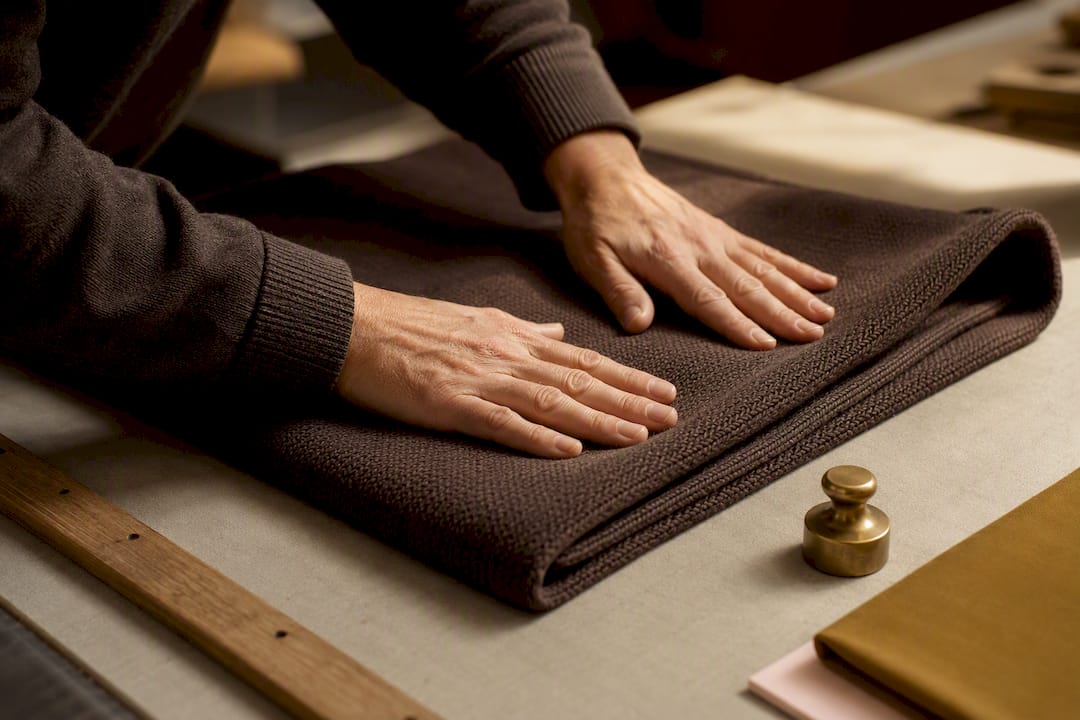
Heavier cotton or midweight knit fabrics help relaxed shapes hold their form instead of collapsing into a shapeless drape.
Pro Tip: A relaxed fit works best in fabric with some weight to it. Thin, lightweight cotton in a relaxed cut tends to look sloppy fast. Heavier weaves hold their shape and read as intentional, not oversized.
What Regular Fit Actually Looks Like on Shirts and Jeans
Regular fit is the baseline most brands build around, and for good reason. It’s cut close to the body’s actual dimensions without hugging it. Chest ease usually runs 4 to 6 inches, enough to move comfortably without excess fabric bunching at the sides.
On jeans, regular fit sits at your natural waist and follows your leg’s shape without clinging, usually with a straight-to-slight-taper leg. Here’s what tells you a shirt or jean is cut regular rather than relaxed:
- Shoulder seam sits right at your shoulder bone, not past it
- Armhole is fitted but not restrictive
- Mid-rise waist on jeans, straight through the hip and thigh
- Torso follows your body’s line instead of hanging away from it
Regular fit earns its name because it works across the widest range of builds and occasions. It’s the fit you reach for when you’re not sure what else to wear.
Relaxed vs Regular: The Exact Numbers to Check
Here’s where the label on the tag stops telling you the whole story. Two shirts marked the same size can fit completely differently depending on how much ease the pattern adds.
| Dimension | Regular fit | Relaxed fit |
|---|---|---|
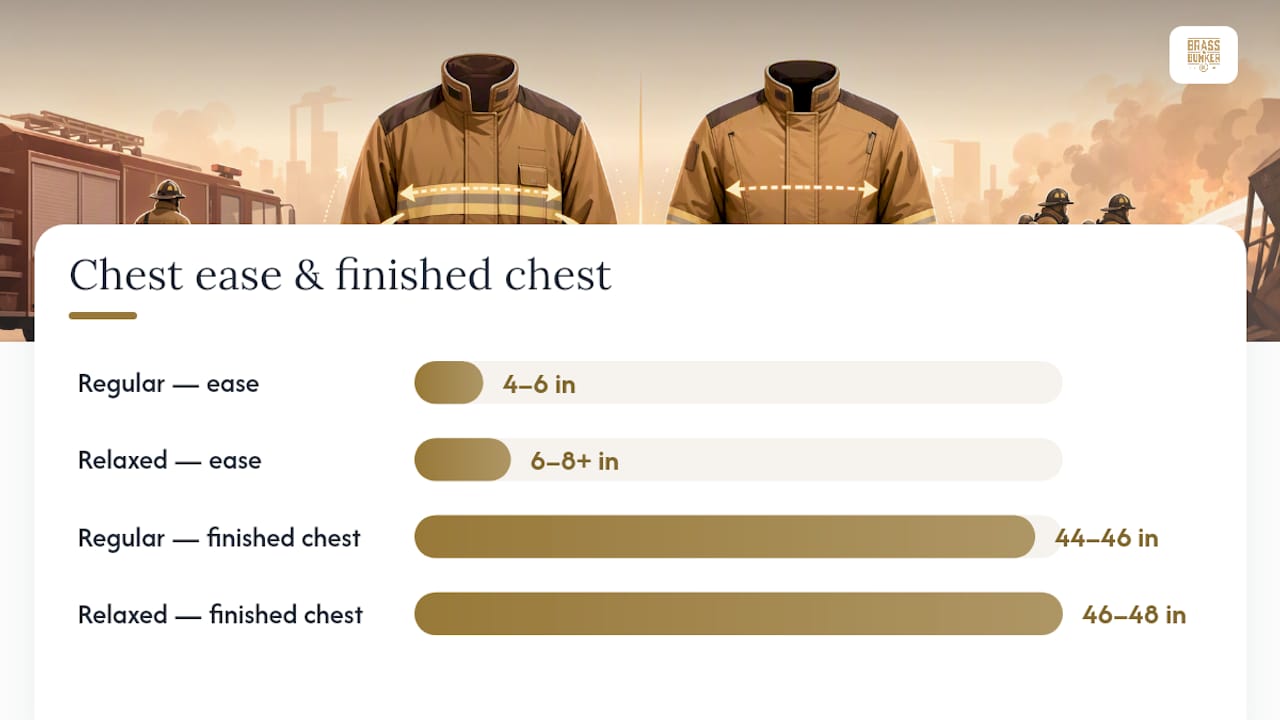
| Chest ease (shirts) | 4–6 inches | 6–8+ inches |
| Seat/thigh room (jeans) | Follows body shape | Noticeably roomier |
| Shoulder seam | At shoulder bone | Dropped or extended |
| Rise (jeans) | Mid-rise | Often longer |
| Silhouette | Straight, slight taper | Fuller through body, tapers at ankle |
| Best for | Everyday wear, smart-casual | Layering, activity, all-day comfort |
Take a 40-inch chest as an example. A regular-fit medium built around that measurement typically finishes at 44 to 46 inches around the chest once ease is added. A relaxed-fit medium on the same 40-inch frame finishes closer to 46 to 48 inches. Same size on the tag, two different garments.
That gap is why “sizing up” for a relaxed look backfires. You’re not adding the right kind of room, just extra length and width in the wrong places, which throws off shoulder seams and sleeve length. A properly drafted relaxed fit adds ease at your true size, not one size above it.
Who Each Fit Flatters and How to Style It
Fit is personal, but body type gives you a starting point worth listening to.
- Lean or athletic builds often look sharper in regular fit shirts and jeans, since the closer cut shows shoulder and chest shape without extra fabric competing for attention. Relaxed fit still works for these builds on active days when movement matters more than silhouette.
- Stocky or broader builds frequently do better in relaxed fit through the torso and thigh, since it avoids pulling across the chest or seat while still tapering enough to avoid looking boxy.
- Curvy builds benefit from relaxed fit on top paired with a more fitted or tapered bottom, balancing volume so nothing reads as one shapeless block.
Use-case matters as much as build. Relaxed fit makes sense for active days, layering over base layers, travel days when you’re sitting for hours, and any smart-casual setting where comfort outranks polish. Regular fit is the better call for anything leaning dressier or uniform-adjacent.
A few styling moves make either fit look deliberate. Cuff relaxed sleeves once to show intention instead of letting fabric bunch. Taper relaxed jeans slightly at the ankle so they don’t billow over your shoes. Pair a relaxed top with a slimmer bottom, or vice versa, so your outfit has one clear point of volume instead of two.
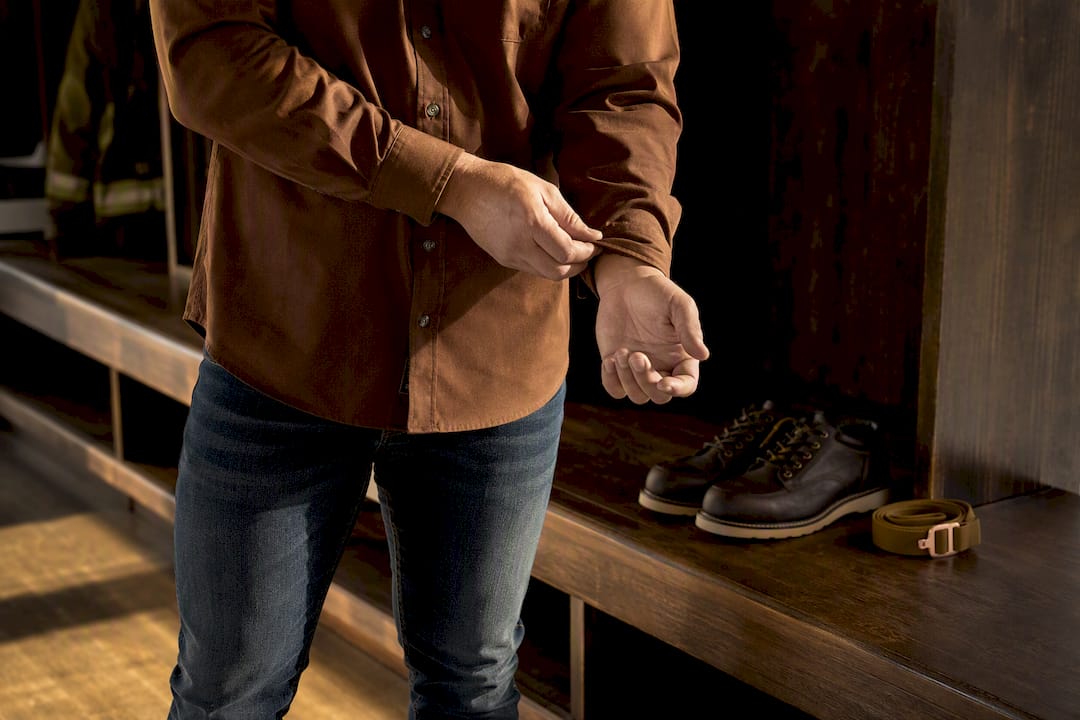
Pro Tip: Never pair a relaxed shirt with relaxed pants and boxy shoes. Pick one silhouette to lead and let the rest of the outfit support it.
How to Choose the Right Fit: A Measurement Checklist
Skip the guesswork. Here’s the sequence that actually works, whether you’re shopping online or standing in a fitting room.
- Measure your chest, waist, hips, and thigh with a soft tape, relaxed but not loose.
- Compare those numbers to the finished garment measurements, not just the size label, since finished specs tell you the actual ease built into that piece.
- Try it on and check the shoulder seam first. It should sit at your shoulder bone for regular fit, or noticeably past it for relaxed.
- Do a movement test. Sit down, raise your arms overhead, reach across your body. If the shirt rides up or pulls tight, it’s too small for the fit you’re after.
- Check the drape. Relaxed fabric should hang away from the body without pooling; regular fit should follow your shape without pulling.
A quick reference for shopping:
- Stick with your true size for a relaxed fit rather than sizing up
- Alter sleeve length or hem rather than buying a size that fixes one problem and creates three more
- Recheck rise and inseam separately on jeans since brands vary widely here
Brass & Bunker Co’s own t-shirt measuring guide walks through this exact sequence if you want a step-by-step reference while you shop.
Brass & Bunker Co: Fit Built Around the Job, Not the Trend
Brass & Bunker Co was founded by a firefighter and a product designer, and that partnership shows up directly in how fit gets decided. Every finished measurement gets weighed against how the piece performs under gear, over a duty shirt, or through a full shift. Fabric weight is chosen the same way, using guidance from the brand’s own t-shirt weight guide to make sure relaxed cuts hold their shape instead of collapsing into something shapeless. Heavier weights read as purposeful. Lighter ones read as an afterthought.
When We Recommend Relaxed vs Regular for Duty and Daily Wear
Relaxed fit earns its place on shift, under gear, and on long days where movement and airflow matter more than a clean silhouette. We recommend it any time comfort has to survive twelve hours. Regular fit belongs in uniform-adjacent settings, smart-casual gatherings, and anywhere a tucked-in, tailored line matters more than extra room. Neither fit is better. They solve different problems, and knowing which problem you’re solving is the whole decision.
— Brass & Bunker Co
Find Your Fit in the Brass & Bunker Co Lineup
Once you know your measurements and which silhouette fits your day, the next step is finding gear cut to match. Brass & Bunker Co’s Tshirts collection runs from heavyweight regular-fit tees built for everyday wear to roomier cuts designed for layering and long shifts. The Hoodies & Jackets collection leans into relaxed silhouettes on purpose, since layering pieces need the extra ease this article just walked through.

Brass & Bunker Co builds every piece around craftsmanship over trend, which means finished measurements matter more than a size chart guess. Before you order, run your numbers against the measuring guide so you land on the right fit the first time, not after a return. If you’re outfitting yourself or someone on shift, the Firefighter Apparel collection carries both relaxed and regular pieces built to last past one washing cycle. Check the collection, compare finished specs to your own measurements, and order the fit that actually matches how you spend your day.
Sources
FAQ
Which Is Better, Relaxed Fit or Regular Fit?
Neither is objectively better. Relaxed fit wins for comfort, layering, and movement, while regular fit wins for a balanced, versatile silhouette that works in more settings without adjustment.
Is Relaxed Fit Bigger Than Regular?
Yes, relaxed fit adds more ease than regular fit at the same labeled size, typically 6 to 8 or more inches of chest ease compared to 4 to 6 inches on regular. The label stays the same; the finished garment measurements do not.
What Body Types Look Best in Relaxed Jeans?
Stockier and broader builds often benefit most from the extra seat and thigh room, since relaxed jeans avoid pulling or clinging in those areas. Lean and athletic builds can wear relaxed jeans too, especially on active days, as long as the leg tapers toward the ankle instead of billowing.
Are Relaxed Fit Jeans Bigger in the Waist?
Not necessarily at the waistband itself, but relaxed jeans typically carry a longer rise and more room through the seat and thigh. Check the finished waist measurement rather than assuming relaxed automatically means a bigger waistband.

