

5 Production Factors Apparel Buyers Use to Pick Pigment vs Garment Dye
Sep 12, 2026
Pigment dyeing gives a vintage, surface-level color that softens and fades with washing, while garment dyeing is a timing decision that can turn out vintage or vivid depending on the dye chemistry behind it. Cotton Incorporated’s technical guidance confirms that pigment methods trade some fastness for that broken-in look, which is exactly why Brass & Bunker Co treats dye selection as a durability decision first, not just an aesthetic one.
TL;DR:
- Pigment dyeing produces a surface-level, vintage look with lower wash and rub fastness compared to reactive garment dyeing, which penetrates the fiber for durability.
- Pigment dyeing is faster and uses less water, but requires careful process control to prevent color migration and fading during washes.
- Garment dyeing timing determines the process stage, not the chemistry, with reactive dyes offering vibrant, long-lasting colors and pigment dyes giving muted, washed-out tones.
- Visible cues for pigment-dyed garments include lighter shades inside seams and a stiff, chalky hand feel, whereas reactive-dyed fabrics feel softer and more uniform.
- For durable apparel, prioritize reactive dyeing with verified fastness and shrinkage data, especially for workwear or clothing subject to frequent washing.
Table of Contents
- Pigment Dye vs Garment Dye: A Quick Side-by-Side
- How Pigment Dyeing Actually Works
- Garment Dyeing Is a Timing Decision, Not a Color
- How to Tell If a Garment Is Pigment-Dyed or Garment-Dyed
- Care and Printing Tips for Both Dye Methods
- Which Dye Method Is Right for Your Garment?
- Brass & Bunker Co’s Take on Dyeing for Duty Gear
- Ready to Wear the Difference?
- Sources
- FAQ
Pigment Dye vs Garment Dye: A Quick Side-by-Side
Pigment dyeing means color particles get bonded to the fabric surface with a binder, rather than absorbed into the fiber. Garment dyeing describes when color gets applied, after the shirt or hoodie is already sewn; it can use pigment chemistry, reactive dyes, or something else entirely. That distinction trips up a lot of buyers, because “garment dyed” gets used as a catch-all when it’s really a stage in the process, not a chemistry.
Here’s how the two concepts stack up across the factors that actually matter for apparel:
- Appearance: Pigment leans muted and weathered; reactive-based garment dye leans saturated and even.
- Hand feel: Pigment can sit slightly stiff where binder concentrates; reactive dye penetrates fiber for a softer, more uniform drape.
- Fastness: Reactive garment dye generally outperforms pigment on wash and rub resistance.
- Water and energy use: Pigment dyeing typically skips the intensive wash-off cycle reactive dyeing requires, according to Hue Corporation’s breakdown of dye versus pigment.
- Cost: Pigment runs can be faster and cheaper to turn around; reactive dyeing demands tighter process control, which adds labor and quality-check time.
How Pigment Dyeing Actually Works
Pigment dyeing starts with a fabric pretreatment, usually a cationic polymer that helps the pigment grab onto the fiber surface since pigment particles carry no natural affinity for cotton the way reactive dyes do. From there, a typical flow looks like this:
- Cationic pretreatment conditions the fabric so pigment particles have something to bind to.
- Pigment and binder application in a rotary drum machine coats the garment surface with color and the resin that holds it there.
- Rinse and cure sets the binder, usually with heat, to lock pigment onto the surface.
- Enzyme or softener finishing breaks down surface stiffness and delivers that lived-in hand shoppers associate with pigment-dyed gear.
Because the color never penetrates the fiber, seams, pocket edges, and stitch lines often show a lighter shade underneath, which is part of what gives pigment-dyed pieces their vintage character. That same surface-bound structure is also the weak point: Cotton Incorporated’s technical bulletin points to lower wash and rub fastness compared to fiber-reactive methods, and if the binder isn’t cured at the right temperature for the right time, pigment can migrate onto lighter fabrics during a wash cycle.
On the production side, pigment dyeing tends to move faster and use less water, since it skips the extended wash-off reactive dyeing needs. That’s a real advantage for smaller runs or brands watching turnaround time.
Pro Tip: If you’re printing on pigment-dyed fabric, run a pretest with a low-bleed or poly-white ink before committing to a full order. Migration shows up fastest on light ink over dark, saturated pigment bases.
Garment Dyeing Is a Timing Decision, Not a Color
“Garment dye” tells you when color happens in the manufacturing chain, after cutting and sewing, not what chemistry made it happen. Brands like this approach because it lets them hold undyed, “greige” stock and commit to color later, which cuts down on dead inventory and lets smaller shops react to trend colors without pre-committing dye lots months in advance.
The results vary sharply depending on which dye family gets used on that finished garment:
- Garment-dyed with reactive dye: color bonds at the molecular level for vivid, even, long-lasting shades.
- Garment-dyed with pigment: same washed, muted look you’d get from pigment dyeing at any stage, since the chemistry, not the timing, drives that aesthetic.
A 2026 textile coloration review in the Wiley Online Library backs this up directly: reactive dyeing remains the standard for high fastness and consistent color on cellulosic garments, while pigment offers substrate flexibility and lower water demand, with recipe optimization deciding how consistent the batch turns out.
Process control matters more once a garment is fully constructed. Liquor ratio, temperature ramp speed, and even which trim or thread was used all affect how evenly color takes across a finished piece, since seams and multiple fabric weights absorb dye at different rates. Shrinkage control also becomes trickier: a garment dyed after sewing needs testing for dimensional stability, or a batch that looked perfect on the rack can come back from the first wash a size smaller.
How to Tell If a Garment Is Pigment-Dyed or Garment-Dyed
A few quick checks tell you more than the hangtag will:
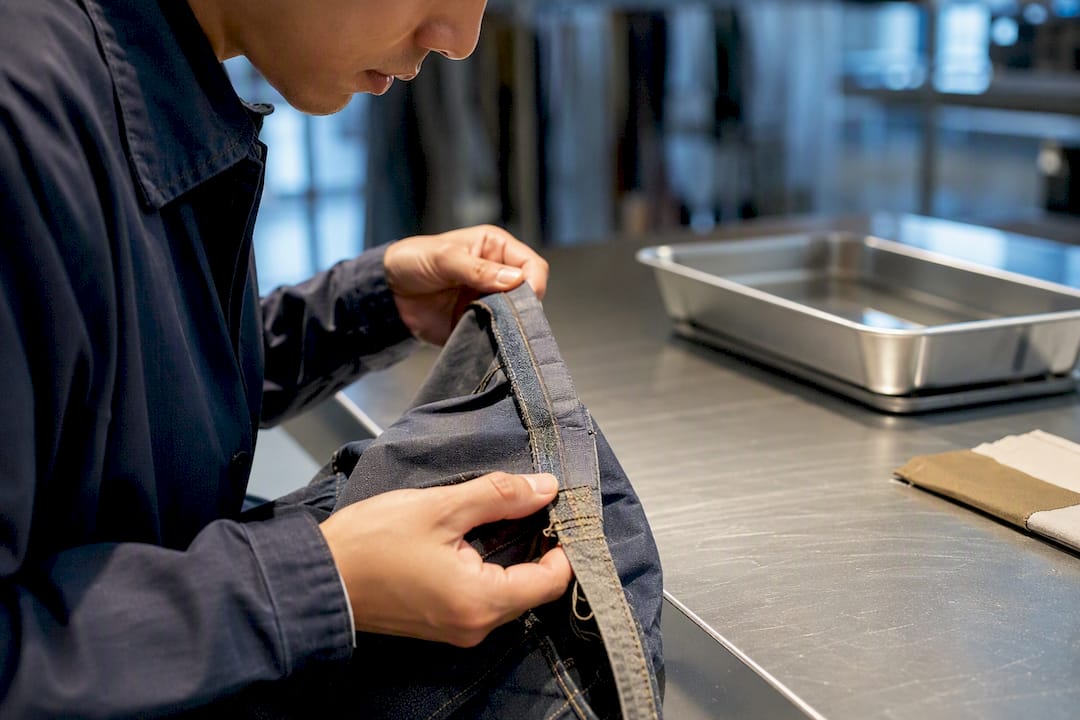
- Flip the seams. Pigment-dyed pieces often show a visibly lighter shade inside collars, cuffs, and stitch lines where the binder didn’t fully saturate.
- Feel the surface. A slightly stiff, chalky hand suggests pigment and binder sitting on top of the fiber; a fully soft, even drape points to reactive dye that penetrated the fabric.
- Watch the first wash. Pigment tends to bleed or transfer early if binder curing was incomplete, while reactive-dyed pieces fade gradually over many cycles.
- Ask before you cut. Never destroy a garment to inspect it. If you’re sourcing for production, ask the supplier for their process sheet or a lab fastness test instead.
Care and Printing Tips for Both Dye Methods
Getting the wash and print steps right protects color and avoids costly returns.
Washing:
- Wash pigment-dyed items in cold water and separate them for the first two or three cycles to catch any early bleed.
- Skip high heat in the dryer, since heat accelerates surface fading on pigment-dyed fabric.
- A gentle detergent without added brighteners helps preserve color depth on both dye types; Brass & Bunker Co’s own detergent recommendations cover this in more detail, and the shirt washing guide walks through print-safe cycles specifically.
Printing:
- Choose low-bleed or poly-white inks on pigment-dyed bases to avoid migration showing through the print.
- Run a cure test at the manufacturer’s recommended temperature before a full production run, since screen printers report that pigment-dyed shirts need different curing strategies than standard reactive-dyed cotton.
- Label garments clearly at retail with wash instructions; unclear labeling is one of the more preventable causes of color-transfer complaints.
Which Dye Method Is Right for Your Garment?
Match the method to what you actually need, not what looks best on a swatch card.
- Chasing a vintage, worn-in look? Pigment dyeing delivers that faded aesthetic straight out of the box, no distressing required.
- Need low water use and faster turnaround? Pigment dyeing’s shorter process, without the intensive reactive wash-off, fits smaller runs and tighter timelines.
- Need vivid, consistent corporate or team colors? Garment dyeing with reactive chemistry holds saturation and repeats accurately batch to batch.
- Building workwear meant to survive years of hard washing? Prioritize fastness ratings and shrinkage tolerance over aesthetic, and request lab-test documentation from your dye house before committing to a run.
Before signing off on a supplier, ask for their fastness ratings, shrinkage tolerance data, and the specific lab-test method they use to verify both. A dye house that can’t produce those numbers on request is one worth a second look.
Brass & Bunker Co’s Take on Dyeing for Duty Gear
Durability comes first for us, because gear that honors first responders has to hold up the way the job does. Authenticity and predictable performance matter just as much: a shirt that fades unevenly after one wash doesn’t reflect the standard we build to. That’s why dye method selection gets weighed against real wear, not just how a piece photographs on day one. If you want to see how those priorities show up in finished product, our police apparel line is a good place to start.
— Brass & Bunker Co
Ready to Wear the Difference?
Now that you know what separates a surface-bound pigment finish from a fully saturated garment dye, picking gear gets a lot easier. Pieces meant for daily wear and hard washing are built so the color and the fabric hold their shape through years of service, not just a season.

Our firefighter apparel collection and t-shirt lineup both feature garments built with durability as the starting point, not an afterthought. If you’re drawn to a lived-in look, our heavyweight tees carry that weathered character honestly; if you need color that holds through years of laundering, our polos and hoodies are cut from fabric chosen for consistent, long-term wear. Browse the hats collection for gear that rounds out a full kit. Whatever you’re after, shop the collection that matches how you’ll actually wear it and place your order today.
Sources
For deeper technical detail, Cotton Incorporated’s garment-dye bulletin covers process control, Wiley’s coloration review compares dye chemistries, and ScreenPrinting.com plus Custom Ink offer practical, shopper-friendly explainers.
- TECHNICAL BULLETIN — Garment Dyeing With Pigments (Cotton Incorporated)
- Textile coloration review — Wiley Online Library
- Screenprinting
FAQ
Is pigment-dyed better than garment-dyed?
Neither wins outright. Pigment dyeing wins on vintage aesthetic and water use, while garment dyeing with reactive chemistry wins on color fastness and consistency.
What is the difference between pigment and dye?
Pigment particles bond to the fabric surface with a binder, while dye molecules chemically bond inside the fiber itself, which is why dyed fabric tends to hold color longer.
Is garment dye better than piece dye or yarn dye?
Garment dye offers more flexibility since brands can hold undyed stock and commit to color later, but the actual color performance depends entirely on which dye chemistry, reactive or pigment, gets used on that finished garment.
What does it mean when a shirt is pigment-dyed?
It means color was applied as pigment particles bonded to the surface with a binder rather than absorbed into the fiber, giving the shirt a soft, muted, slightly faded look right from the first wear.

